

Heartbreak and hope for Endangered Eastern Bristlebirds after Croajingolong fires
Friday 17 April, 2026
A major post-fire survey in Croajingolong National Park has revealed both devastating losses, yet also encouraging signs of recovery, for one of the state’s most threatened species, the Eastern Bristlebird.
Following the January 2026 Mallacoota-Barracoota fires, last month Parks Victoria staff and partners undertook an intensive on-ground assessment of the Howe Flat area, the endangered Eastern Bristlebirds’ last remaining habitat.
The results of the survey confirm the scale of the challenge ahead - but also highlight the resilience of nature and the importance of coordinated conservation action.
A landscape transformed
In Victoria, it was estimated there were fewer than 200 Eastern Bristlebirds left, with the last remaining population found in the remote Howe Flat area of Croajingalong National Park. A smaller insurance population is also being established at Wilsons Prom.
There was real concern for the survival of the species when a lightning strike ignited a fire right in the centre of their known Howe Flat habitat earlier this year. The bushfire impacted more than 80 per cent of the Eastern Bristlebirds known habitat, with most of it left severely burnt.
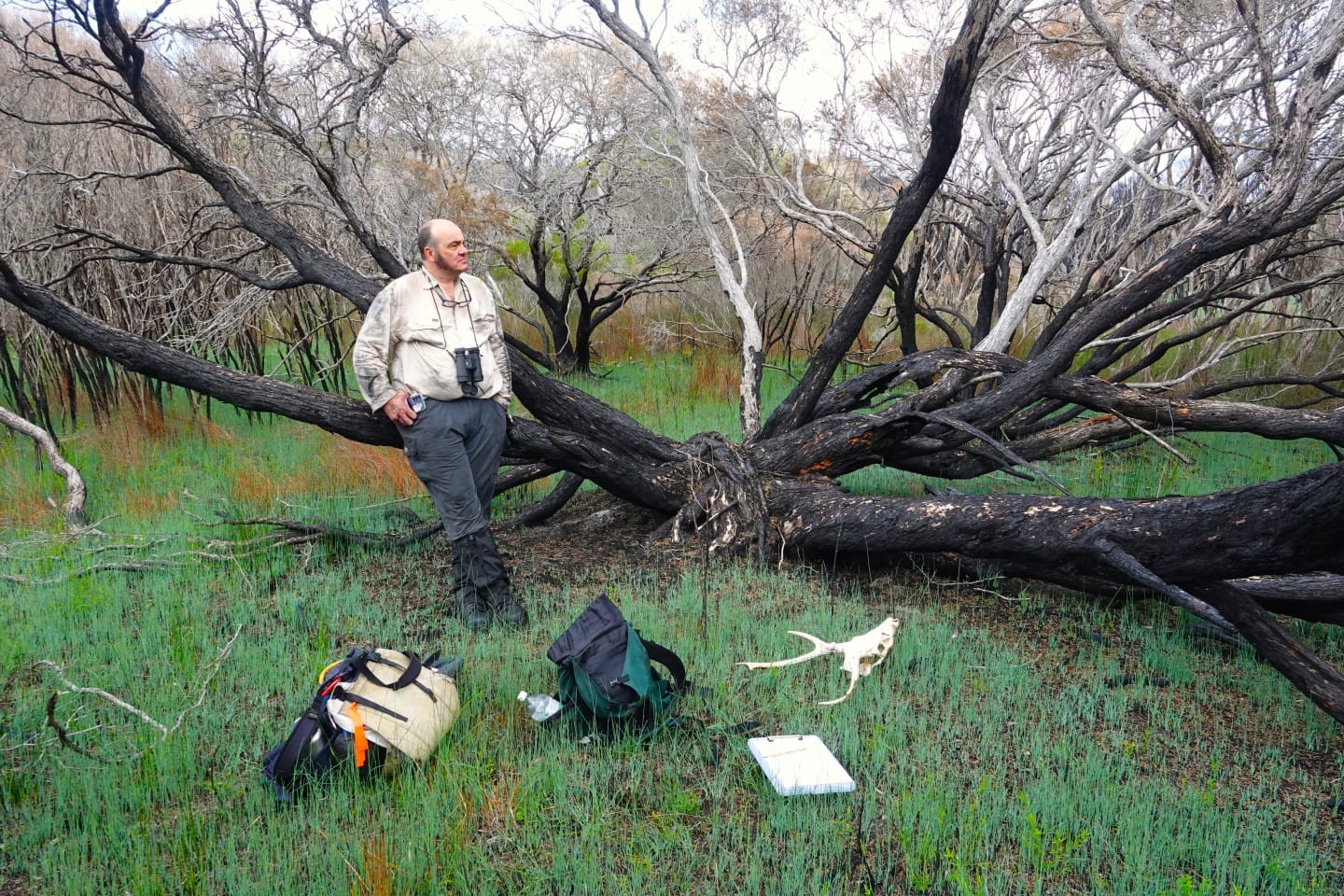
Above: Dr Marty Lockett assesing the remaining habitat at Howe Flat, Croajingalong National Park. Photographer: Dr Mark Antos.
According to Dr Marty Lockett, an Ecological Monitoring Officer in Parks Victoria’s Conservation Science and Insights team, areas that were once dense, almost impenetrable heath and tea tree, have now been dramatically opened up due to the fire.
“It was quite shocking to see how much had changed - how much had gone. Areas where you couldn’t see your hand in front of your face, you can now see 100 metres or more,” Marty said.
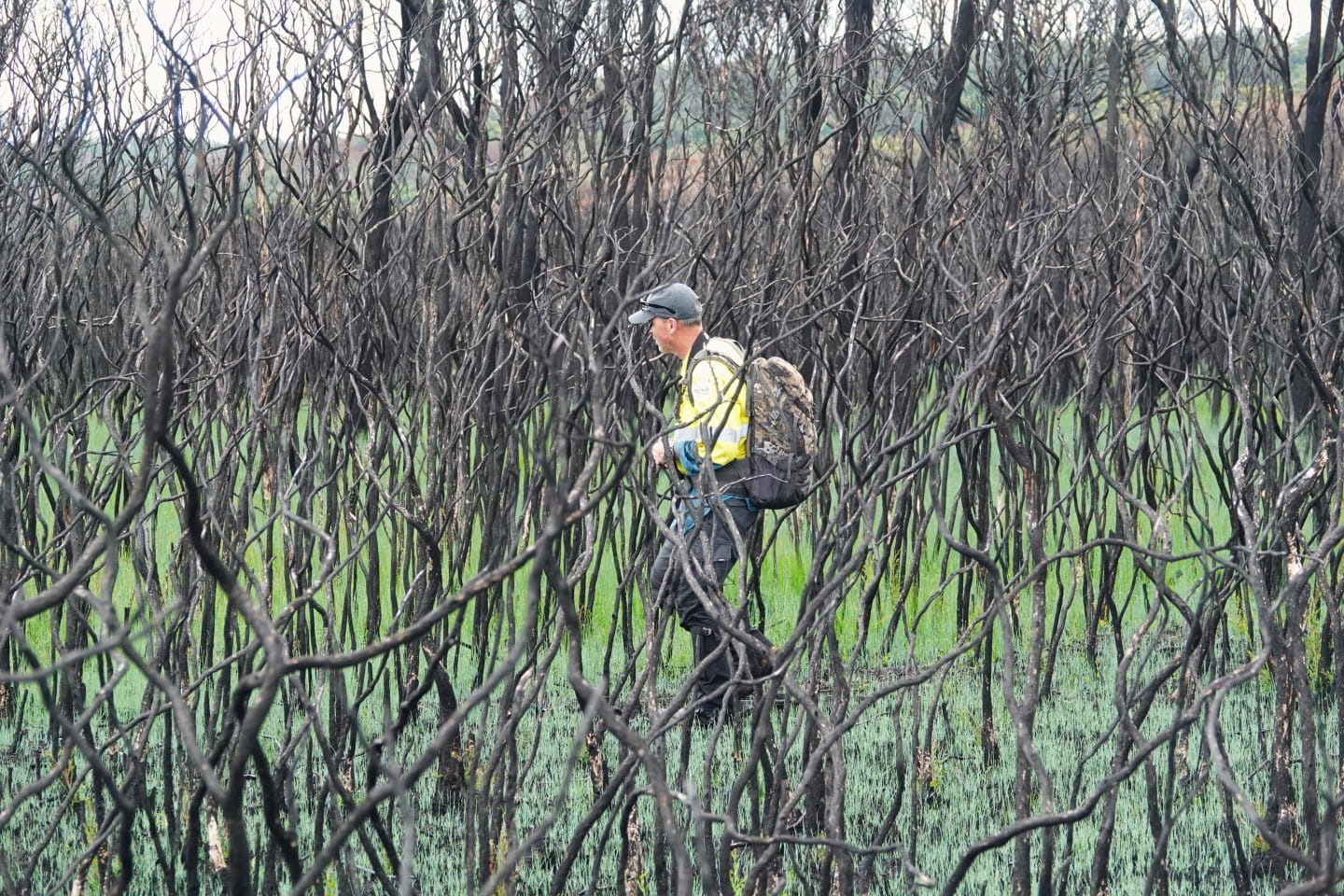
Above: The previously dense and impenetrable bush at Howe Flat has now been opened up following the fire. Photographer: Dr Mark Antos.
The Eastern Bristlebird relies on thick, low vegetation for shelter and feeding. These small, ground-dwelling birds spend nearly all their time moving through dense tussocks and shrubs, rarely venturing into open areas.
“They don’t like open ground at all, they just like to move like little arrows through the vegetation,” Marty said.
Habitat assessments across 107 sites found only 17 per cent of suitable habitat remained intact for the Eastern Bristlebird, while nearly three-quarters was burnt to ground level.
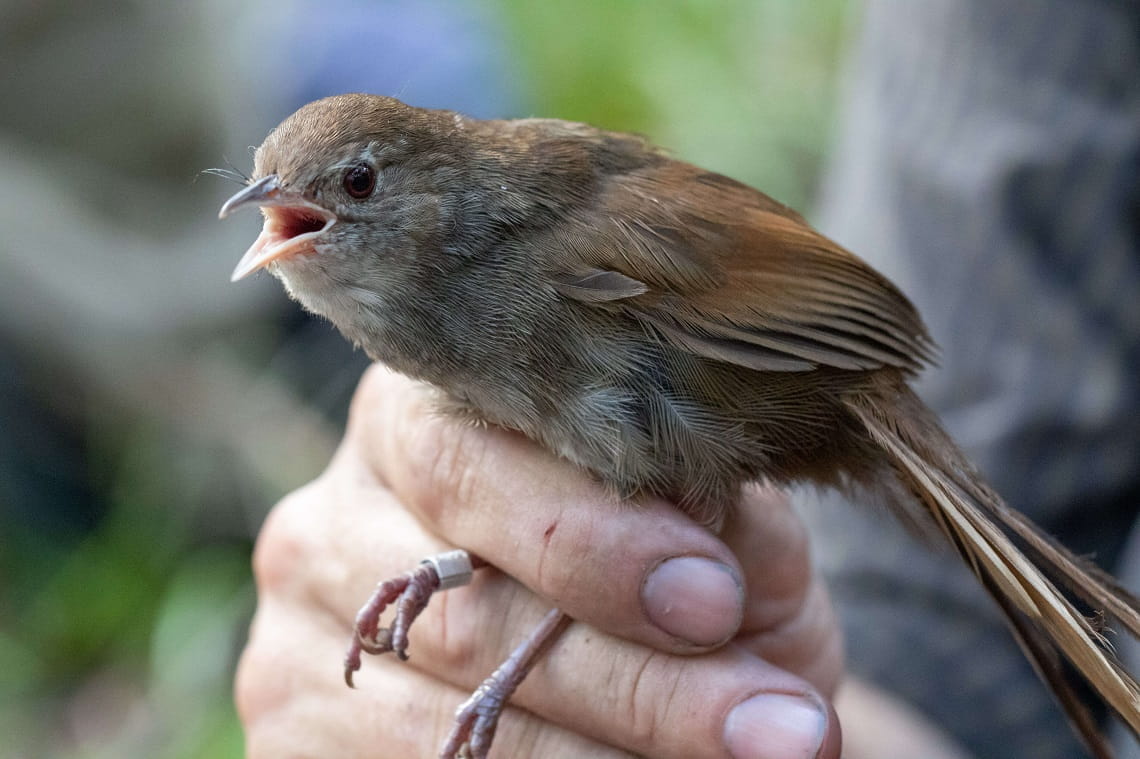
Above: An Eastern Bristlebird. Photographer: Marcia Riederer/DEECA.
Fewer birds, but not gone
Survey teams used a combination of passive listening and call playback techniques (where recordings of bird calls are used to prompt a response) to detect bristlebirds across the landscape.
Six individual Eastern Bristlebirds were detected across three locations, down from nine recorded on the same routes before the fire.
While the decline is concerning, the presence of the surviving birds offers hope.
“We know that at least some have survived - and likely more than we found,” Marty said.
Importantly, many birds appear to have moved into refuges or less typical habitat on the edges of the burn.
“They’ve probably moved into nearby areas with less favourable habitat, and while not ideal for them, it’s good enough that they’re not going to starve.”
Listen to Episode 5 of Closer to Nature to hear more about the Eastern Bristlebirds plight for survival.
Signs of recovery
Despite the scale of the fire, there are encouraging early signs of vegetation regrowth, particularly among grass trees (Xanthorrhoea) which are already resprouting.
“The amount of new growth in the past 8 to 10 weeks is amazing,” Marty said.
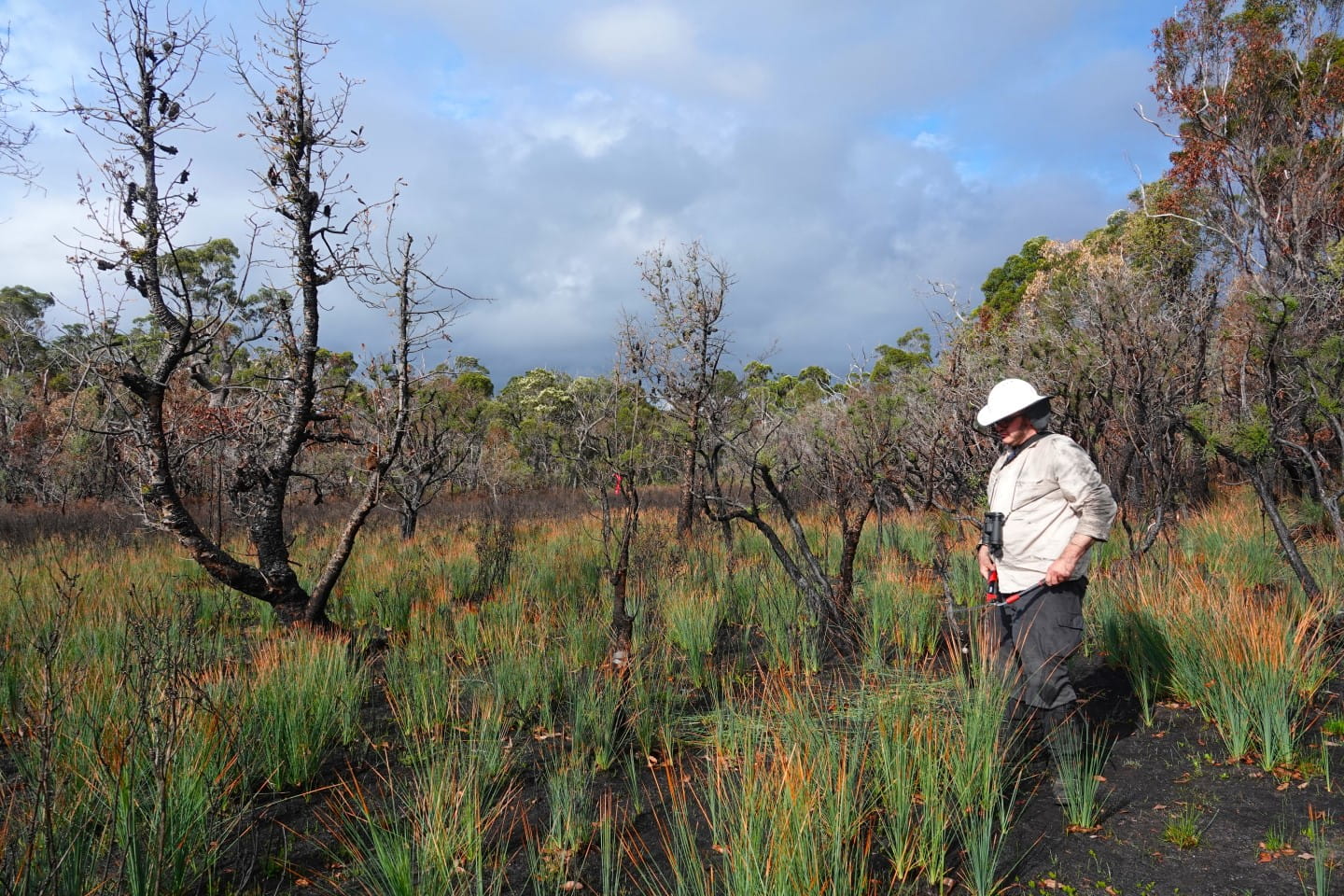
Above: Some plant species, like these grass trees, are bouncing back quickly following the fire, while others will take much longer to regenerate. Photographer: Dr Mark Antos.
It’s estimated that around 25 per cent of habitat could recover enough within 12 months to provide some cover for bristlebirds. However, large areas, where many plants and trees were killed outright, will take much longer to regenerate.
This creates what Marty describe as a critical “awkward period”.
“If we can keep the birds alive for the next two to five years while the heath recovers, that’s the key.”
A broader ecosystem response
Marty considers the Eastern Bristlebird an “umbrella species” - meaning that protecting their habitat also benefits many other species.
“What’s good for the Bristlebird is good for everything else, like ground parrots, snakes, frogs, and a whole lot of other things.”
Encouragingly, the surveys confirmed other threatened wildlife is still present in the area, including Ground Parrots, Glossy Black Cockatoos, Blue-Winged Parrots and Green and Gold Bell Frogs.
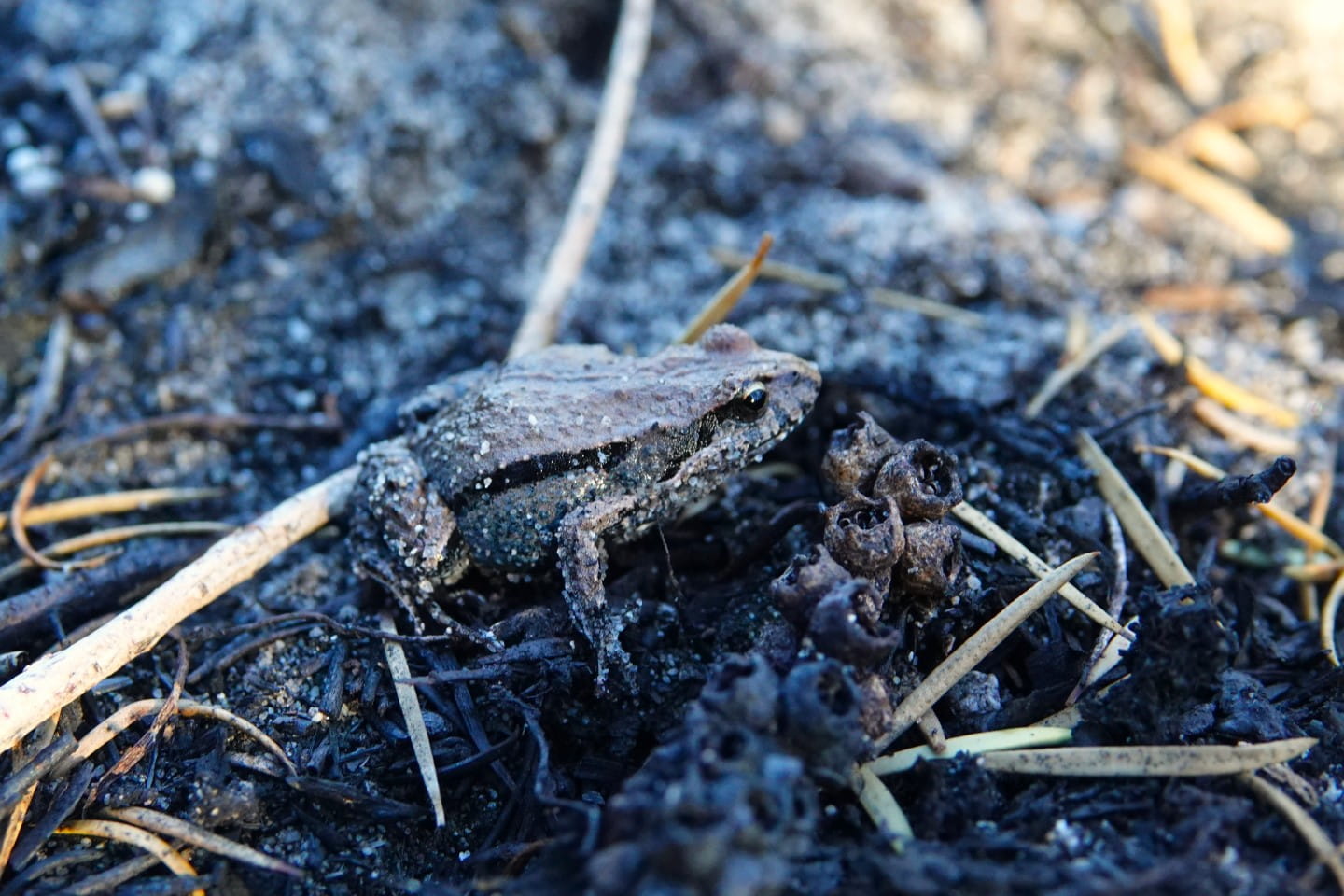
Above: This Common Froglet was just one of a raft of species that was observed during the Howe Flat survey. Photographer: Dr Mark Antos.
White-throated Nightjars and Powerful Owls were heard at night, while Jacky Dragons, Scarlet Robins and Southern Emu-wrens were also observed.
In fact, the more open post-fire conditions may have made some species easier to detect.
“We saw two ground parrots in three days, when on most trips we don’t see any, so that was heartening,” Marty said.
Monitoring with new technology
The survey effort combined traditional fieldwork with emerging technology to better understand the post-fire environment.
In just three and a half days, teams deployed 80 motion-sensing cameras and 46 acoustic recorders across the landscape.
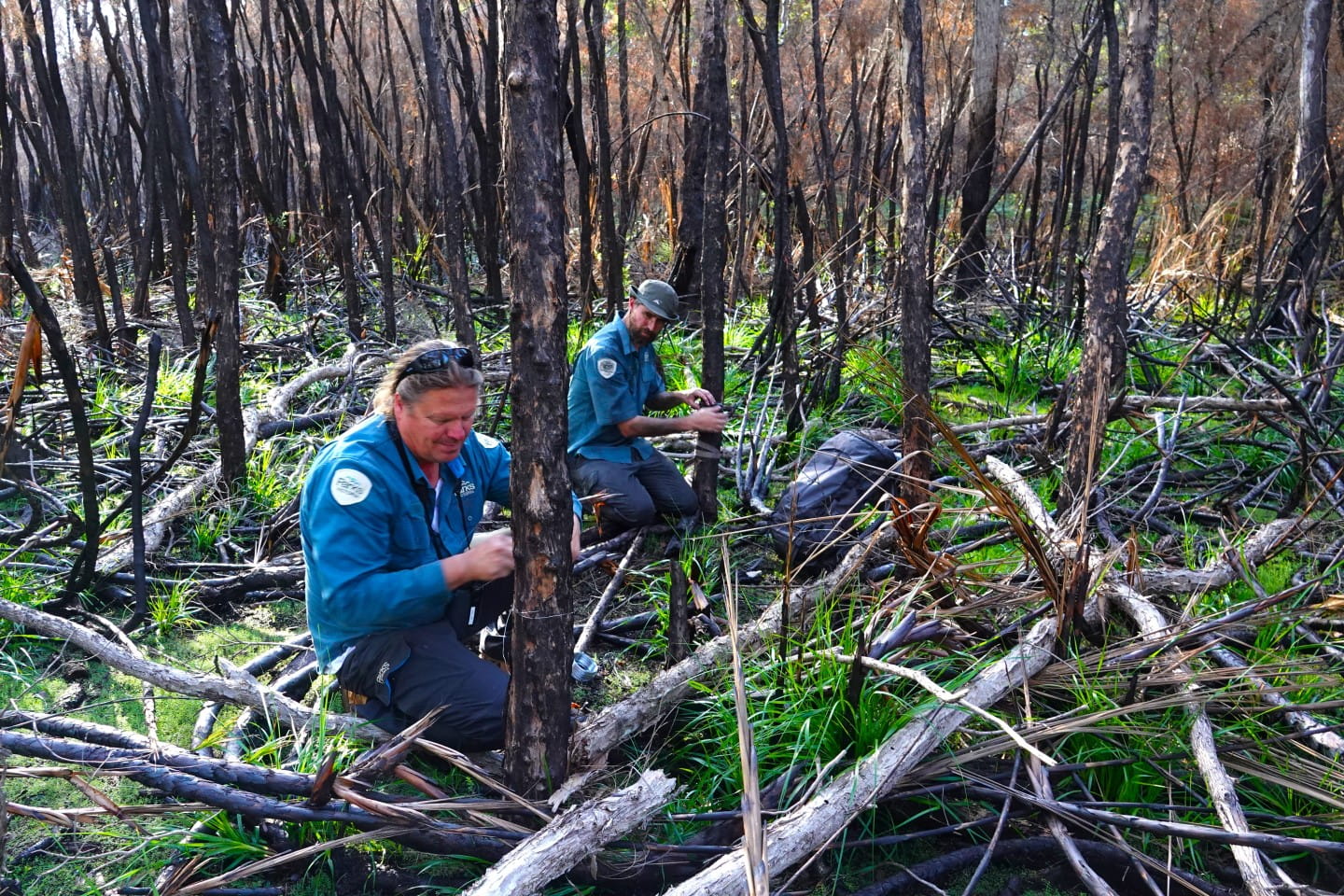
Above: Parks Victoria has set up cameras and audio recorders to monitor wildlife in burnt areas of Croajingalong National Park. Photographer: Dr Mark Antos.
The recorders will capture months of environmental sound, which will be analysed using AI developed by the Arthur Rylah Institute for Environmental Research.
This technology helps overcome one of the biggest challenges in monitoring elusive species.
“With call playback, if the birdisn’t nearby or doesn’t respond, you can miss it. But recorders are always listening,” Marty said.
Managing threats
With vegetation cover reduced, predation by foxes and feral cats is now the most immediate threat to surviving bristlebirds.
Cameras will help identify hotspots of predator activity and measure the effectiveness of control programs over time.
“At the very least, we can track trends, like are fox numbers going up or down? That’s critical for managing the risk.”
Deer are also impacting recovery by trampling vegetation, creating wallows and compacting soil, which slows regrowth.
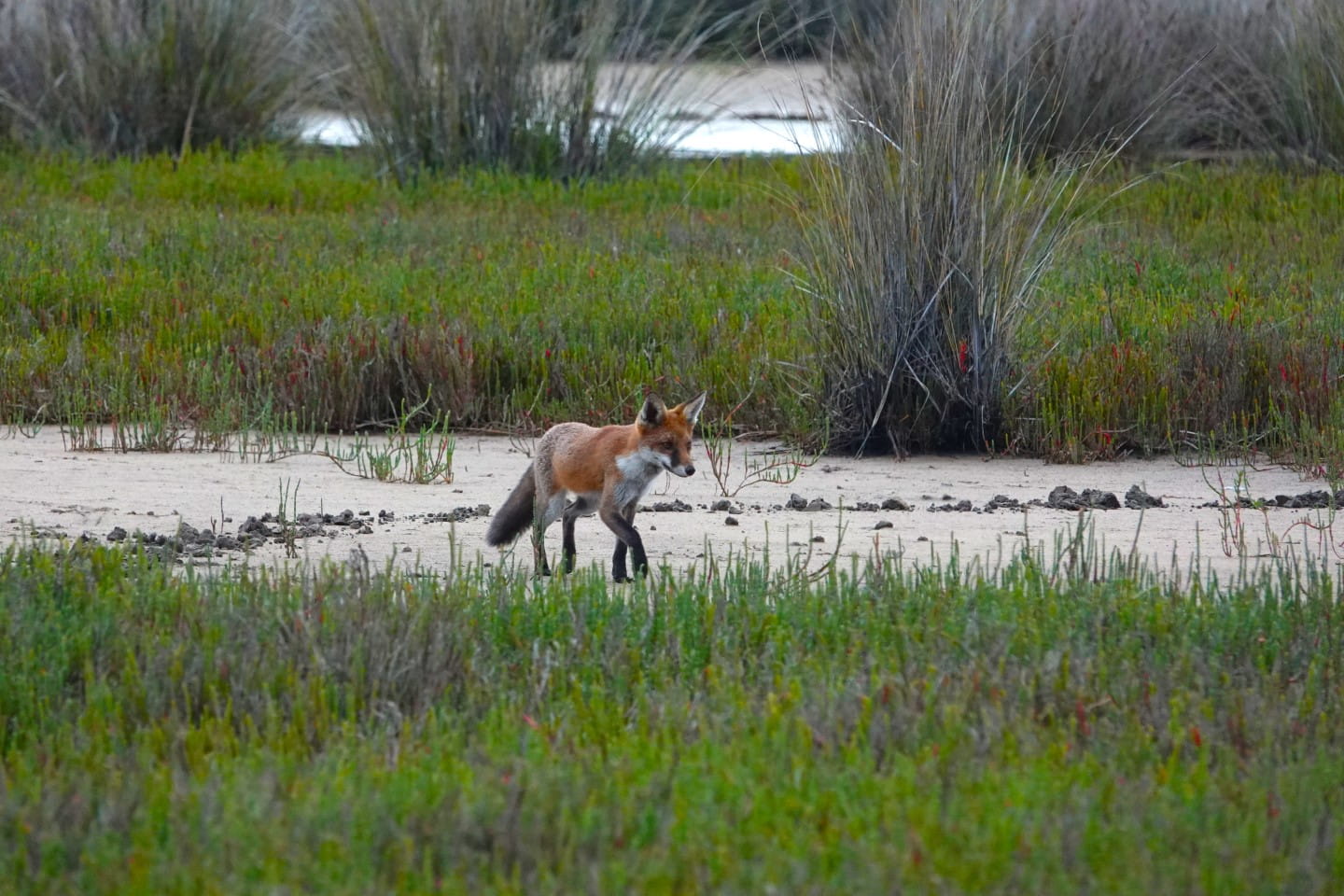
Above: Foxes, like this one seen at Howe Flat, are now one of the biggest threats to the Eastern Bristlebirds' recovery. Photographer: Dr Mark Antos.
A collaborative effort
The survey brought together Parks Victoria’s Conservation Science and Insights team, Gippsland Conservation staff, and Mallacoota rangers.
Despite the remote location and limited access - with few tracks and often waterlogged walking routes - the team completed the ambitious program of work ahead of schedule.
This collaboration will continue in the months ahead, as teams focus on predator control, habitat recovery and ongoing monitoring.
Looking ahead
While the fires have dealt a major blow to the Eastern Bristlebird population in Croajingolong, the outlook is not without hope.
The combination of surviving birds, regenerating habitat and targeted conservation action provides a pathway for recovery - if the species can persist through the coming years.
“This is a real step change for the landscape,” Marty said.
“But the good news is the Eastern Bristlebirds are still here.”
Sign up for our regular Conservation and Science Newsletter to hear from Parks Victoria Chief Scientist Dr Mark Norman about what discoveries are happening in our parks and reserves, direct to your inbox.
Related news

New signs of hope for threatened species in the Western Grasslands Reserve
Threatened plants and animals are showing encouraging signs of recovery in the open grasslands west of Melbourne, as long-term restoration work across the Western Grasslands Reserve begins to take hold.

Mapping spinifex grass to help a tiny bird
How do we help protect the only bird in Victoria that is naturally found nowhere else – the Mallee-emu wren? By finding out where it lives and other places that might be suitable for it.

Celebrating 10 years of Woowookarung Regional Park
Ten years from its official opening and the creation of a new trail, Parks Victoria is asking community members to have their say on Woowookarung Regional Park's next chapter.