

Meet the volunteer flying fox guardians caring for Yarra Bend's bats
Thursday 21 May, 2026
For more than 20 years, the passionate volunteers from Friends of Bats and Bushcare have dedicated countless hours to caring for one of Victoria’s most misunderstood native animals, the Grey-headed Flying Fox.
In that time, the Friends of Bats and Bushcare (FOBB) have helped thousands of orphaned and injured flying foxes return safely to the Yarra Bend Park colony through a community-run soft-release program.
Grey-headed Flying Foxes, also known as fruit bats, forage on fruit, nectar and pollen. During their nightly travels, they spread pollen over long distances, helping to pollinate flowering trees while also dispersing seeds across the landscape, supporting forest regeneration, and making them one of Australia’s most important pollinators.
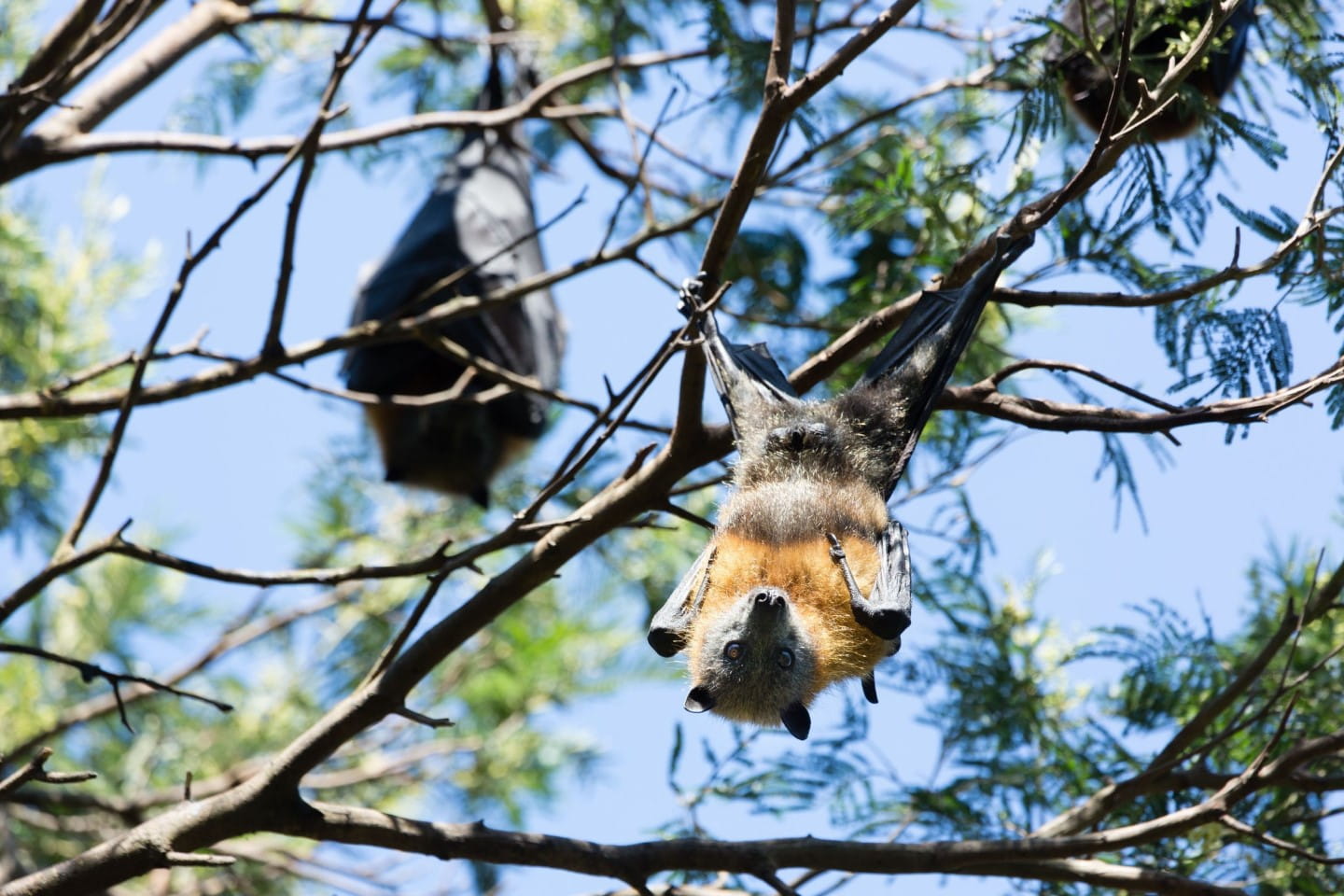
Photo: Grey-headed Flying Foxes are listed as Vulnerable on the IUCN Red List of Threatened Species.
The Grey-headed Flying Fox colony at Yarra Bend Park can balloon to more than 50,000 individuals in the busy summer months.
Yarra Bend Park is home to the important soft-release facility, where rescued flying foxes adjust to colony life before being released back into the wild. It is the final stage in a long rehabilitation process for orphaned young bats that have lost their mothers due to extreme heat, starvation, injury or habitat pressures.
Since the FOBB soft-release program began, volunteers have helped more than 2,000 Grey-headed Flying Foxes back into the wild - all made possible through the efforts of rescuers, carers, colony monitors, wildlife advocates and bushcare volunteers.
Volunteers monitor the colony, searching for vulnerable pups that are too young to survive alone.
Abandoned pups are then taken into care by wildlife carers, where they can spend months being hand-raised. Once they are old enough to fly, they move into large aviaries known affectionately as ‘bat school’, where they build strength, learn to socialise with other bats and begin feeding on native blossom and fruit.
The final step is ‘graduation’ into FOBB’s soft-release enclosure at Yarra Bend Park.

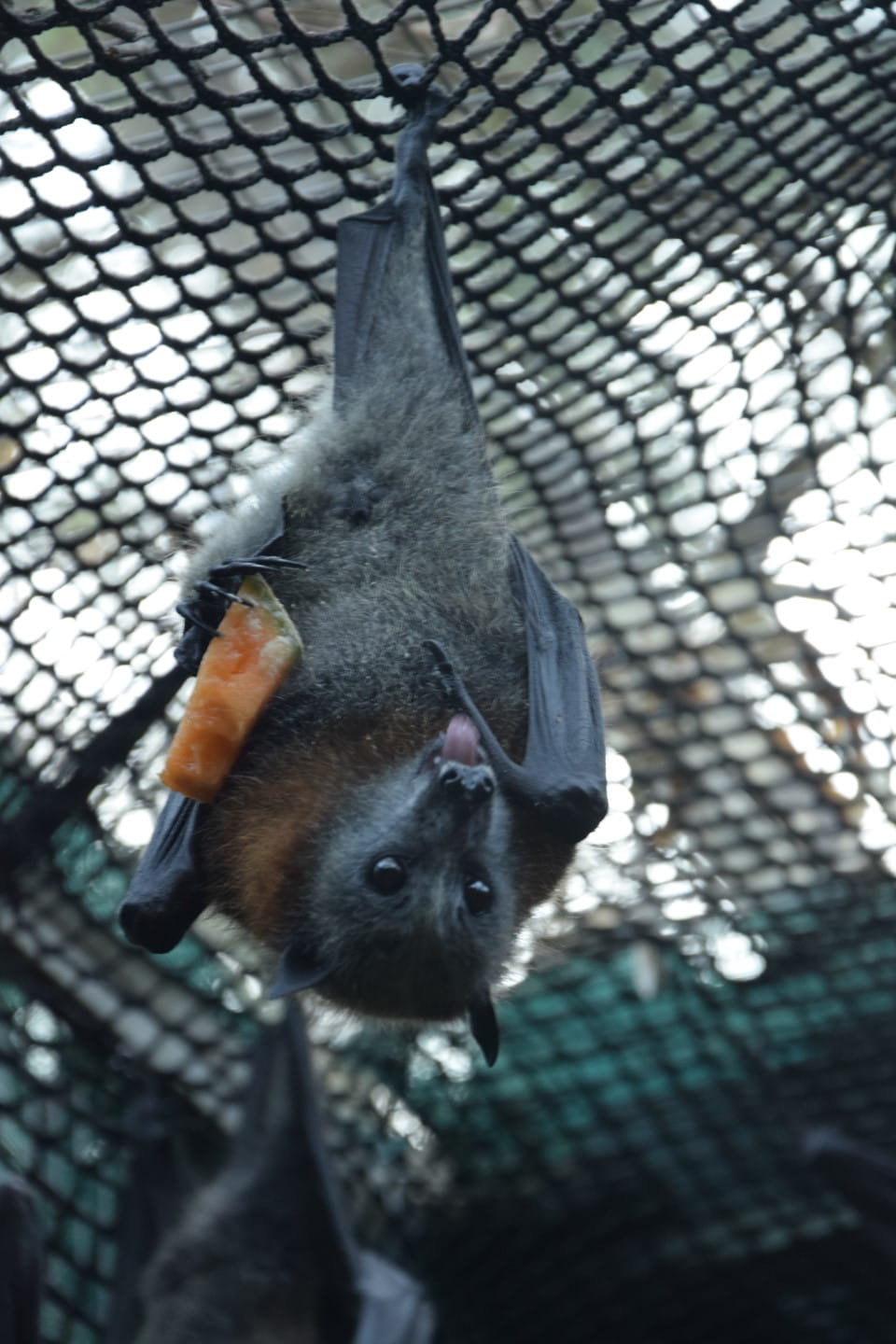
Photos: Flying fox pups prefer to stick close to their mothers (left), but FOBB will assist releasing them back into the colony if they are orphaned (right).
The young bats spend several nights becoming familiar with the sights and sounds of the colony before volunteers open the hatch and allow them to venture out into the wild at their own pace.
Friends of Bats and Bushcare secretary Brooke Henderson said she first became involved after stumbling across the colony during a walk in Yarra Bend Park.
“I just sort of looked up and saw all the bats and thought, ‘Oh my God, this is amazing’,” Brooke said.
“I saw a poster for FOBB, contacted them, and started doing monitoring and volunteering from there.”

Brooke Henderson, Friends of Bats and Bushcare secretary

Trained wildlife carers look after the pups until they can enter FOBB's soft-release enclosure in Yarra Bend Park
Brooke said one of the most rewarding parts of volunteering was being part of a community united by a shared passion for wildlife.
“It’s really nice to know that you’re part of this amazing community of people who work so well together for a group of animals that a lot of people don’t understand,” she said.
“You get to be around them, see them raise their pups, and have their first flights. It’s such a privilege.”
The soft-release program relies entirely on volunteers and requires an extraordinary level of commitment.
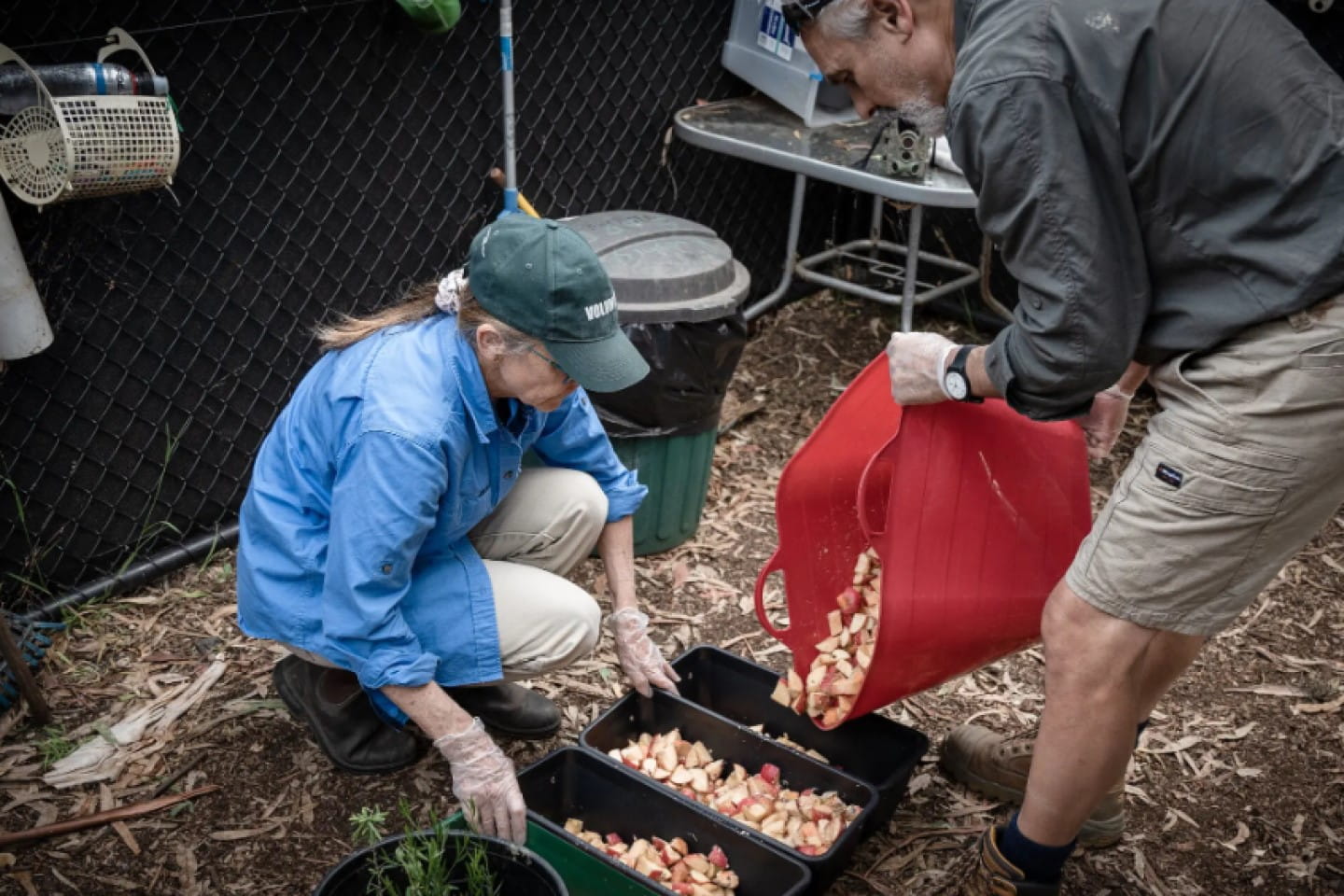
Photo: Friends of Bats and Bushcare volunteers prepare food for the young bats, clean the enclosure, help with releasing them, on top of caring for the Yarra Bend Park environment.
Every morning, volunteers clean the enclosure, wash feeding equipment and prepare the site. Every afternoon, another team chops fruit, adds high-protein supplements and prepares food for the bats before they return at dusk.
In busy years, up to 3000kg of fruit may be required to feed the orphaned young bats.
During the first couple of nights after release, volunteers also act as ‘guardians’, watching over the young bats as they navigate the colony for the first time – some crash into trees, might end up in the river, and it’s not uncommon for foxes (the ground-dwelling type) to be waiting nearby.
However, FOBB’s work extends far beyond just caring for Yarra Bend’s bats – bushcare is an important part of the group’s mission as well.
Volunteers run regular bushcare activities focused on improving habitat throughout the colony, with an emphasis on planting mid-storey and under-storey vegetation to create safer movement pathways for pups while increasing shade for the whole colony.
“One of the main ways our bushcare activities can save flying foxes is by planting more multistorey vegetation to make sure they’ve got lots of shade and coverage on hot days,” Brooke said.
The habitat restoration work has become increasingly important as climate change and extreme heat events place mounting pressure on flying fox populations.

The colony of Grey-headed Flying Foxes at Yarra Bend Park swells to more than 50,000 bats during summer

Dr Davita Coronel, Friends of Bats and Bushcare president
FOBB president Dr Davita Coronel said last season had been particularly difficult for both bats and volunteers.
“There were already a lot of starving flying foxes and orphaned pups before the extreme heat arrived,” Davita said.
“The volunteer rescuers and carers do so much work. They’re often working around the clock on top of their regular jobs.”
Davita, who first became involved with the group while undertaking her PhD into human relationships with flying foxes, said FOBB put a real emphasis on education and community understanding.
“There’s a lot of misunderstanding and stigma around bats,” Davita said.
“But there is also much to be gained from learning to live with flying foxes.”
“Flying foxes are crucial pollinators and seed dispersers, and a lot of people just don’t realise the role they play in the environment.”
AJ Reid, who joined FOBB as a volunteer a year ago, said volunteering had shown him the value of community-led conservation and encouraged others to get involved however they could.
“As a volunteer, you get the opportunity to have a direct contribution to conservation,” AJ said.
“But there are also little things anyone can do - picking up rubbish during a walk, planting native trees or joining a local conservation group – every action matters.”

AJ Reid has been volunteering with FOBB for the past year

Yarra Bend Park is one of Melbourne's most popular urban parks
Davita said anyone was welcome to get involved, whether helping monitor the colony, preparing food for recovering bats, planting native vegetation or supporting wildlife rescue efforts.
“There are low-key ways to get involved, and there’s a place for anyone who wants to help wildlife and learn more about the environment,” Davita said.
“With the pressures our native animals are facing, they need all the support we can give them.”
Volunteering in nature
This week is National Volunteer Week (18-24 May 2026). Being a volunteer in our parks is a great way to help conserve the beauty of Victoria’s landscape – while also learning more about plants and wildlife, gaining new skills, spending time in the outdoors, improving your health and wellbeing, and meeting new friends.
Click here to find out how you can volunteer in a park near you or subscribe to our newsletter to receive the latest volunteering opportunities and updates straight to your inbox.
Related news

New signs of hope for threatened species in the Western Grasslands Reserve
Threatened plants and animals are showing encouraging signs of recovery in the open grasslands west of Melbourne, as long-term restoration work across the Western Grasslands Reserve begins to take hold.

Mapping spinifex grass to help a tiny bird
How do we help protect the only bird in Victoria that is naturally found nowhere else – the Mallee-emu wren? By finding out where it lives and other places that might be suitable for it.

Celebrating 10 years of Woowookarung Regional Park
Ten years from its official opening and the creation of a new trail, Parks Victoria is asking community members to have their say on Woowookarung Regional Park's next chapter.